
When the Roses Stop You in Your Tracks | Marcus Bergin's Garden Notebook
THE SEASONS
Marcus Bergin
7/4/20262 min read
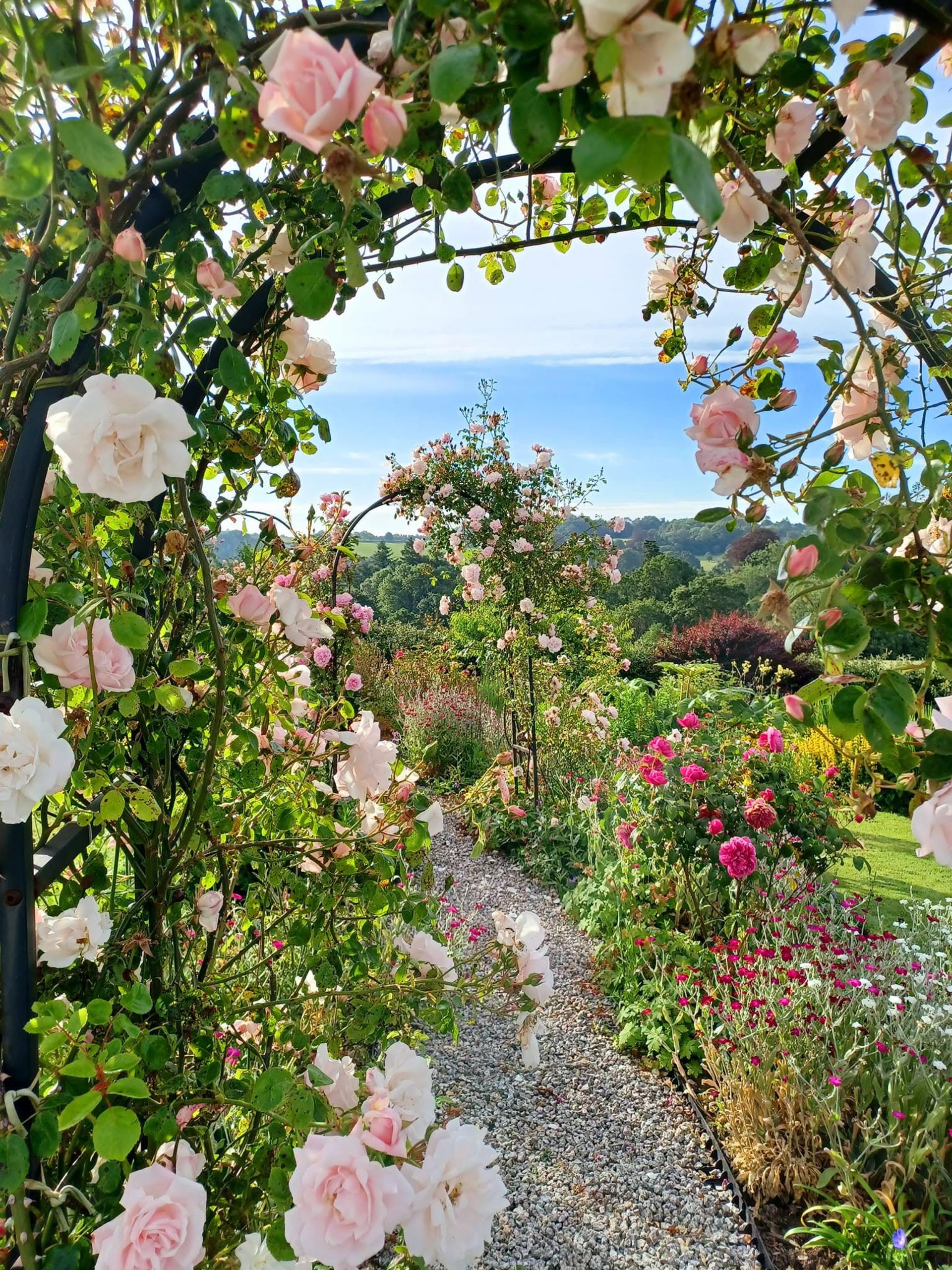
When the Roses Stop You in Your Tracks
There are plenty of beautiful flowers in a July garden, but every now and then, a rose still has the ability to make me stop what I'm doing.
One of the advantages of spending every day in gardens is that you become familiar with the rhythm of the seasons. You begin to expect certain things. Snowdrops will appear towards the end of winter, bluebells will quietly take over woodland floors in spring, and, by early July, the roses are usually approaching their very best.
You might think that after seeing thousands of roses over the years, I'd become a little immune to them.
The opposite has happened.
Every summer, there comes a moment when I'm walking across a garden, usually carrying something far less romantic than a wheelbarrow full of hedge cuttings, and a rose catches my eye. It might be the richness of the colour, the way the morning light falls across the petals or simply the extraordinary perfume drifting through the warm air before I've even seen the plant itself.
Whatever the reason, I find myself stopping.
Not because I have to.
Because I want to.
I sometimes think roses have an unfair reputation. People often describe them as difficult, fussy or too much work, and I'll admit they ask a little more from us than some shrubs do. They need feeding, pruning and, every now and then, a little attention when disease or pests decide to make themselves at home.
Yet I can't think of many plants that give so much in return.
A well-grown rose has a generosity about it. It doesn't produce one or two flowers and quietly call it a day. It seems determined to fill every stem with colour, scent and life. Stand beside a healthy shrub in full bloom and it becomes more than just another plant in the border. Bees drift from flower to flower, petals catch the afternoon sunlight and the fragrance seems to linger long after you've walked away.
Perhaps that's why roses have remained so popular for generations.
Not because they're fashionable.
Because they make people feel something.
I've seen customers smile simply because a rose planted by a parent or grandparent has flowered once again. I've heard stories about gardens where the roses are the only plants that have survived decades of change. They quietly outlive garden redesigns, new fences and changing fashions, blooming faithfully every summer as though none of those things matter.
There's something rather reassuring about that.
Working with roses has taught me that some things are worth the extra effort. In a world where we're often encouraged to choose the easiest option, the rose quietly reminds us that beauty sometimes asks for a little patience. Feed it well, prune it carefully and give it the right place to grow, and it has an extraordinary way of rewarding your efforts year after year.
Even now, after all this time, I still find myself stopping beside a particularly beautiful rose.
The wheelbarrow can wait another minute.
The weeds certainly aren't going anywhere.
Some flowers deserve a little of our time.
For me, the rose has always been one of them.
Marcus
Marcus Bergin
Thoughts, observations and conversations from a life spent in gardens.
© 2026. Marcus Bergin | All rights reserved.