
The First Thing I Look At | Marcus Bergin's Garden Notebook
THE CRAFT OF GARDENING
Marcus Bergin
7/4/20262 min read
The First Thing I Look At
People often think the first thing I notice is the lawn. The truth is rather different.
Whenever I visit a garden for the first time, people often apologise before we've even reached the back door.
They point towards the grass and explain that it needs cutting. They mention the weeds in the border, the hedge that has grown a little too wide or the patio that's become greener than they would like. Occasionally, they'll tell me the garden looked much better last year, as though I might be disappointed by what I'm about to find.
The funny thing is, I'm rarely looking at any of those things.
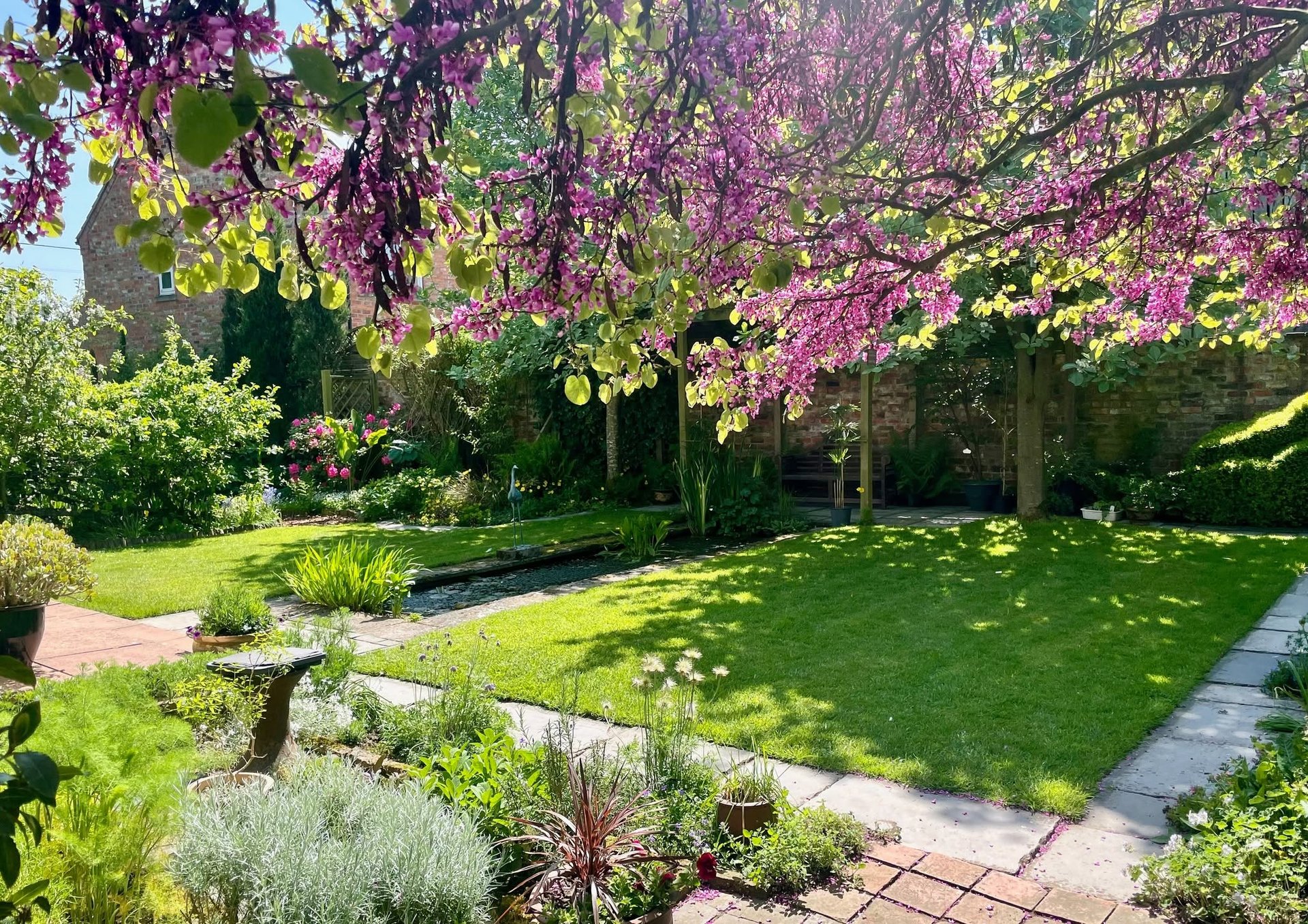
By the time we've stepped onto the lawn, my eyes have usually wandered somewhere completely different. I'm looking upwards into the trees to see what sort of canopy they create. I'm watching how the light moves across the garden and noticing which areas get the most sun and which spend most of the day in shade. Almost without thinking, I'm trying to understand how the garden works before I begin thinking about how it looks.
Light changes everything.
Two gardens can have exactly the same soil, the same-sized borders, and even the same plants, yet feel completely different because of the way sunlight moves through them. A border that enjoys the morning sun has a very different character from one that's warmed by the late afternoon. A mature tree might create deep shade beneath its branches while leaving the rest of the garden bathed in light. Those patterns shape every decision that follows, whether we're choosing plants, deciding where to place a seat or simply understanding why one shrub is thriving while another seems determined not to.
It's one of the reasons I never rush around a new garden.
Experience has taught me that the first impression isn't always the most important one. Sometimes I'll stop halfway across a lawn, turn around and look back towards the house because the view is telling me something I hadn't noticed from the patio. At other times, I'll walk to the very back of the garden and stand quietly for a moment, trying to understand how the space feels when you're looking back towards home.
Gardens have a surprising way of revealing themselves if you're prepared to slow down.
I think many of us become so focused on individual plants that we forget to look at the whole picture. We notice the rose that isn't flowering particularly well or the patch of lawn that's beginning to thin, but we overlook the gentle curve of the path that leads us through the garden or the way a mature tree frames the view from the kitchen window. Those are often the details that make a garden memorable, yet they're also the easiest to miss.
Perhaps that's why I've always enjoyed visiting gardens I've never seen before.
For a few minutes, before any work begins, everything is simply an observation. There are no right or wrong answers yet. Just questions waiting to be understood. Why is that border flourishing? Why does this corner feel so inviting? What makes this garden different from all the others I've visited this week?
The answers are rarely found in a single flower or a neatly cut lawn.
More often, they're found in the character of the place itself.
Every garden has one.
Learning to see it has probably been one of the most valuable lessons gardening has ever taught me.
Marcus
Marcus Bergin
Thoughts, observations and conversations from a life spent in gardens.
© 2026. Marcus Bergin | All rights reserved.