
I'm Sorry It's Such a Mess | Marcus Bergin's Garden Notebook
Why do so many people apologise for their gardens? A personal reflection from Marcus Bergin on perfection, weeds and the stories every garden tells.
REFLECTIONS FROM THE GARDEN
Marcus Bergin
5/8/20243 min read
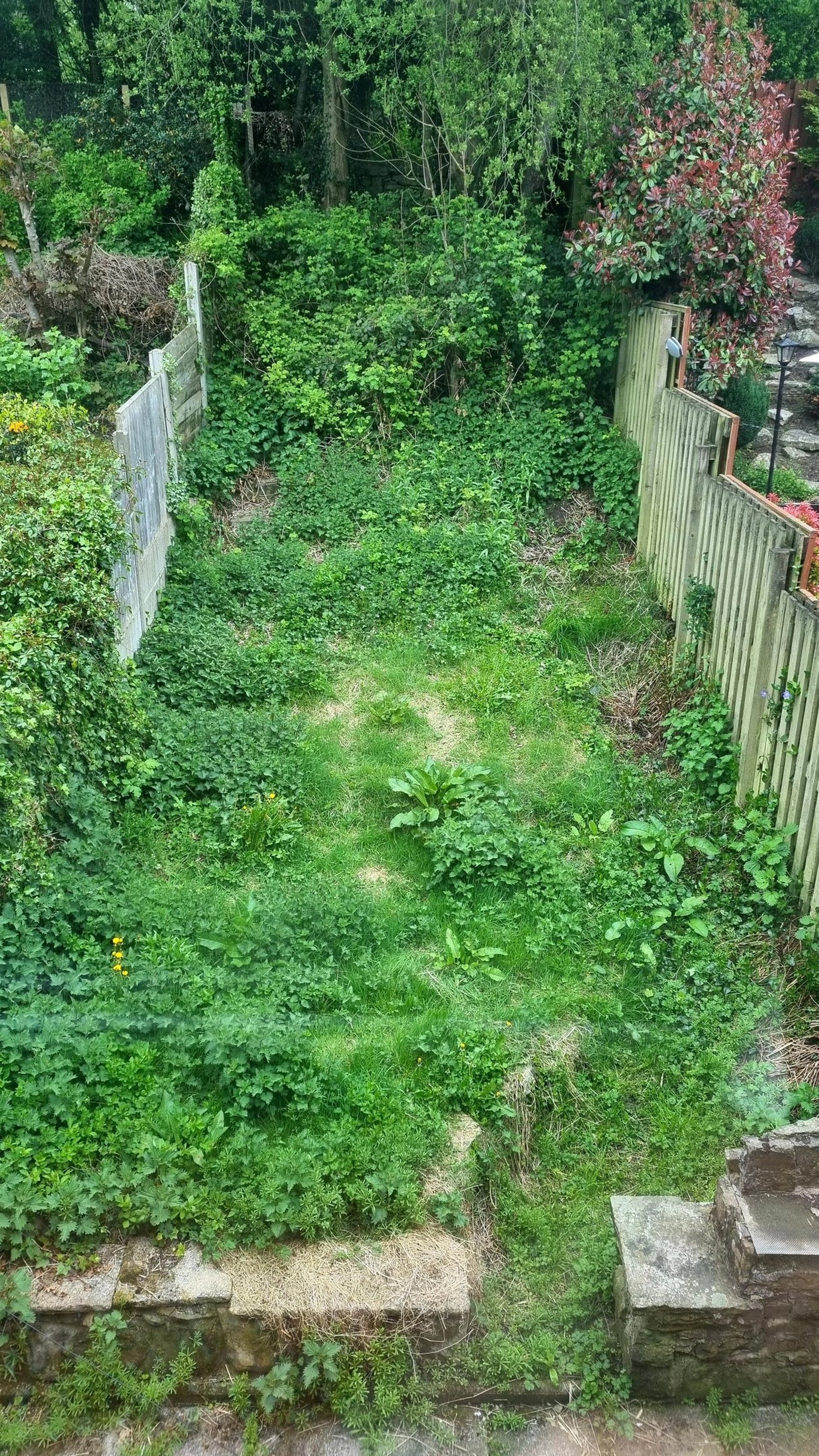
"I'm Sorry It's Such a Mess"
There are certain phrases I hear so often that I can almost predict them before they're spoken.
One of them is, "I'm sorry it's such a mess."
It usually happens before I've even had a chance to look around. The customer opens the gate, smiles apologetically and immediately starts pointing out everything that's wrong. The lawn has got too long. The borders are full of weeds. The hedge should have been cut weeks ago. They tell me they've been meaning to get out there, but life has simply got in the way.
I always find myself smiling because I know what I'm about to see isn't really what they're describing.
They're seeing everything they haven't managed to do.
I'm seeing a garden.
After more than twenty years working as a gardener, I've learnt that no two gardens tell the same story. Of course, they all have plants, lawns, shrubs and patios, but it's the lives behind them that make them different. Some belong to busy families trying to juggle work and school runs. Others belong to retired couples who simply can't manage as much as they once could. Sometimes the garden has taken a back seat because someone has been ill, or because life has thrown something far more important in their direction.
A few weeds are rarely the whole story.
Perhaps that's why I've never understood why people feel the need to apologise. Gardens aren't static. They grow whether we have time for them or not. Miss a few weekends and nature quietly gets on with things. The grass grows a little longer, self-seeded flowers appear where you weren't expecting them, and the bindweed decides it's found the perfect place to settle.
That's not a failure.
That's simply what gardens do.
I often think we've become a little too hard on ourselves. It's easy to scroll through photographs online and convince ourselves that everyone else's garden is immaculate. Every lawn seems perfectly striped. Every border appears carefully planned. Every pot is overflowing with colour.
Real gardens are rarely like that.
Real gardens are places where children build dens, dogs race across the lawn, and birds steal nesting material from forgotten corners. They're somewhere to drink a cup of tea after work, somewhere to enjoy the first warm evening of spring or somewhere to escape for twenty quiet minutes when the world feels just a little too busy.
They're lived in.
And I think that's exactly how they should be.
If I'm honest, my own garden isn't perfect all the time either. People are sometimes surprised when I admit that. They imagine a professional gardener must spend every spare moment outside with a pair of secateurs in one hand and a trowel in the other.
The reality is rather different.
After a full day looking after other people's gardens, there are evenings when I'd much rather sit quietly and simply enjoy mine. I notice the blackbird hopping across the lawn, watch the bees working the flowers and accept that the weeds can wait another day.
Gardening has taught me that there's a difference between caring and chasing perfection.
One brings joy.
The other can become exhausting.
Over the years, I've realised that some of my favourite gardens haven't been the neatest or the grandest. They've been the ones with character. The little back garden where grandchildren proudly showed me the tomatoes they'd grown themselves. The shady corner that had quietly become home to frogs and hedgehogs. The old apple tree that had been planted decades earlier and was still producing fruit for three generations of the same family.
Those are the gardens I remember long after I've packed the tools back into the van.
Not because they were perfect, but because they meant something.
So if we ever meet and the first thing you say is, "I'm sorry it's such a mess," please don't worry.
I won't be looking for reasons to judge your garden.
I'll be looking for its story.
Because every garden has one.
And helping people write the next chapter of that story is one of the reasons I still love what I do.
Happy Gardening
Marcus Bergin
Thoughts, observations and conversations from a life spent in gardens.
© 2026. Marcus Bergin | All rights reserved.