The Old Wheelbarrow | Marcus Bergin's Garden Notebook
Marcus Bergin reflects on an old wheelbarrow, the memories our tools collect and why some of the simplest things become the hardest to replace.
GARDEN STORIES
Marcus Bergin
5/8/20243 min read
The Old Wheelbarrow
It isn't the newest tool I own. It certainly isn't the prettiest. But I'd struggle to part with it.
If someone asked me to list the most important tools I own, they might expect me to mention a mower, a hedge trimmer or perhaps my favourite pair of secateurs. Those are the tools people notice. They're the ones who do the hard work and, if one of them breaks down, the day quickly becomes much more difficult.
But the tool I'd probably miss the most is an old wheelbarrow.
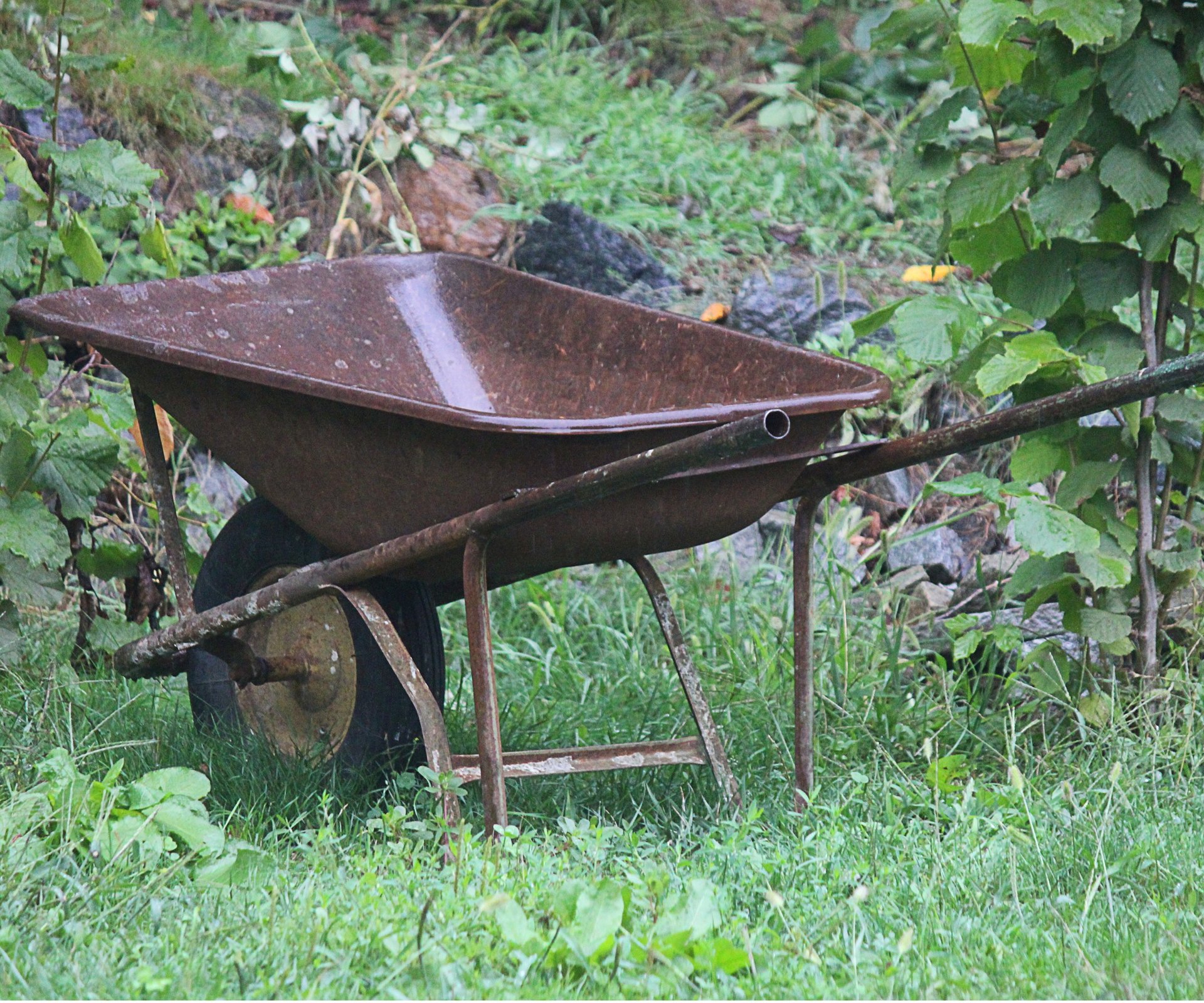
There's nothing particularly special about it. The paint has long since disappeared from the handles, there are scratches down both sides, and the tray carries the dents that only years of work can produce. It's transported more bags of compost than I could ever count, carried countless loads of hedge cuttings, and spent more hours pulling weeds than I care to remember.
If I'm honest, it looks rather tired.
Every now and then, someone suggests I should replace it. They usually have a point. New wheelbarrows are lighter, shinier and undoubtedly easier to push when they're full of gravel. Mine squeaks occasionally, the handles are polished smooth by years of use, and it leans ever so slightly to one side when it's empty.
Yet every time I think about buying a new one, I decide not to.
Perhaps it's because that old wheelbarrow has quietly accompanied me through so much of my working life. It has been there on cold January mornings when the ground was hard with frost and on long summer afternoons when I wondered whether I'd ever reach the end of a particularly overgrown hedge. It has crossed grand country gardens, modest town gardens and everything in between without ever seeming to care where it was working.
Tools have an odd way of collecting memories.
I can look at the scratches along the inside of the tray and remember moving stone for a wildlife pond years ago. A dent near the front reminds me of the day I underestimated the weight of a tree stump. Even the worn wooden handles tell their own story. They fit my hands in a way a brand-new wheelbarrow never could.
Perhaps that's why I find it difficult to throw old tools away.
Not because they have any great monetary value, but because they quietly become part of the story. They witness thousands of ordinary days that eventually add up to a career. They are there for the gardens that turn out beautifully, the jobs that prove harder than expected and the moments that make you laugh long after you've packed everything back into the van.
I sometimes think we live in a world that encourages us to replace things a little too quickly. The newest version always promises to be better, faster or more efficient. Sometimes that's true.
Sometimes the old one still has plenty left to give.
That wheelbarrow reminds me of something gardening has taught me over the years. Not everything has to be perfect to be useful. Not everything old has lost its value. A weathered bench can still be the best seat in the garden. An old apple tree can produce the sweetest fruit. A battered wheelbarrow can still carry another load of compost without complaint.
There's something rather reassuring about that.
One day, I know I'll have to replace it. Wheels wear out, metal eventually gives up, and even the best-made tools don't last forever. When that day comes, I'll probably thank it for its service before taking the new one out for its first job.
But I have a feeling the new one will have a long way to go before it earns quite the same affection.
Marcus
Marcus Bergin
Thoughts, observations and conversations from a life spent in gardens.
© 2026. Marcus Bergin | All rights reserved.