Learning to Read a Garden | Marcus Bergin's Garden Notebook
REFLECTIONS FROM THE GARDEN
Marcus Bergin
7/25/20265 min read
Learning to Read a Garden
There are mornings when I arrive at a garden and, for the first few minutes, I don't do any work at all. If someone happened to be watching from the kitchen window, they might wonder why I've not unloaded the mower or reached for the secateurs. To them it might look as though I'm delaying the day before it has even begun. The truth is quite the opposite. Those first few minutes are often the most important part of my visit because that's when I begin to understand what the garden is trying to tell me.
I rarely walk straight to the first job anymore. Instead, I wander slowly around the garden, almost without thinking. My eyes move from the borders to the lawn, from the shrubs to the trees, and then back again. I notice the roses that have opened since last week and the petals already beginning to fall beneath them. I see a hydrangea leaning a little further into the path than it was only a few days ago. The lavender is alive with bees, while the catmint that was buzzing with activity not so long ago has suddenly become much quieter. None of these things demands immediate attention, yet together they tell me that the garden has moved on. It is never exactly the same place twice.
When I first started gardening, I don't think I noticed any of this. Like most people, I arrived with a list of jobs in my head. The hedge needed cutting. The lawn needed mowing. The weeds needed pulling. Gardening was about completing tasks, and at the end of the day there was a real sense of satisfaction in standing back and seeing everything looking tidy again. There is still satisfaction in that, of course, but somewhere over the years my relationship with gardens began to change. Without consciously trying, I stopped seeing them as collections of jobs and started seeing them as living places that were constantly changing, whether I happened to be there or not.
Perhaps that's something experience teaches all gardeners. We begin by looking at individual plants, but over time we start to notice the relationships among them. We see how one shrub is slowly outgrowing its space, how a neighbouring perennial has become hidden beneath it, or how a young tree now casts shade over a border that used to enjoy sunshine for most of the afternoon. We begin to understand that nothing in a garden exists on its own. Every plant is responding to the weather, the soil, the seasons and the plants around it. The garden is not made up of separate pieces. It is one connected living system.
I think that's why I often say that I read a garden rather than simply look at it. Reading asks something different of us. It asks us to notice patterns, to understand context and to recognise that what we see today has usually been shaped by everything that happened yesterday. A lawn turning brown is rarely just about the lack of rain this week. It may be the result of months of changing weather, shallow roots, compacted soil or the growing canopy of a nearby tree. A rose covered in blackspot isn't simply an unhealthy rose. It's part of a much bigger conversation between the weather, air movement, soil conditions and the variety itself.
The more time I spend in gardens, the more I realise that they are constantly communicating. The trouble is, they don't shout. They whisper. They tell us things gradually, through tiny changes that are easy to miss if we're rushing to tick another job off the list. A leaf turns slightly paler. A border flowers a week earlier than usual. One corner stays damp long after the rest of the garden has dried. Another seems to struggle every summer, no matter what is planted there. Individually, these observations seem insignificant. Collect them over months and years, however, and they become the language of that particular garden.
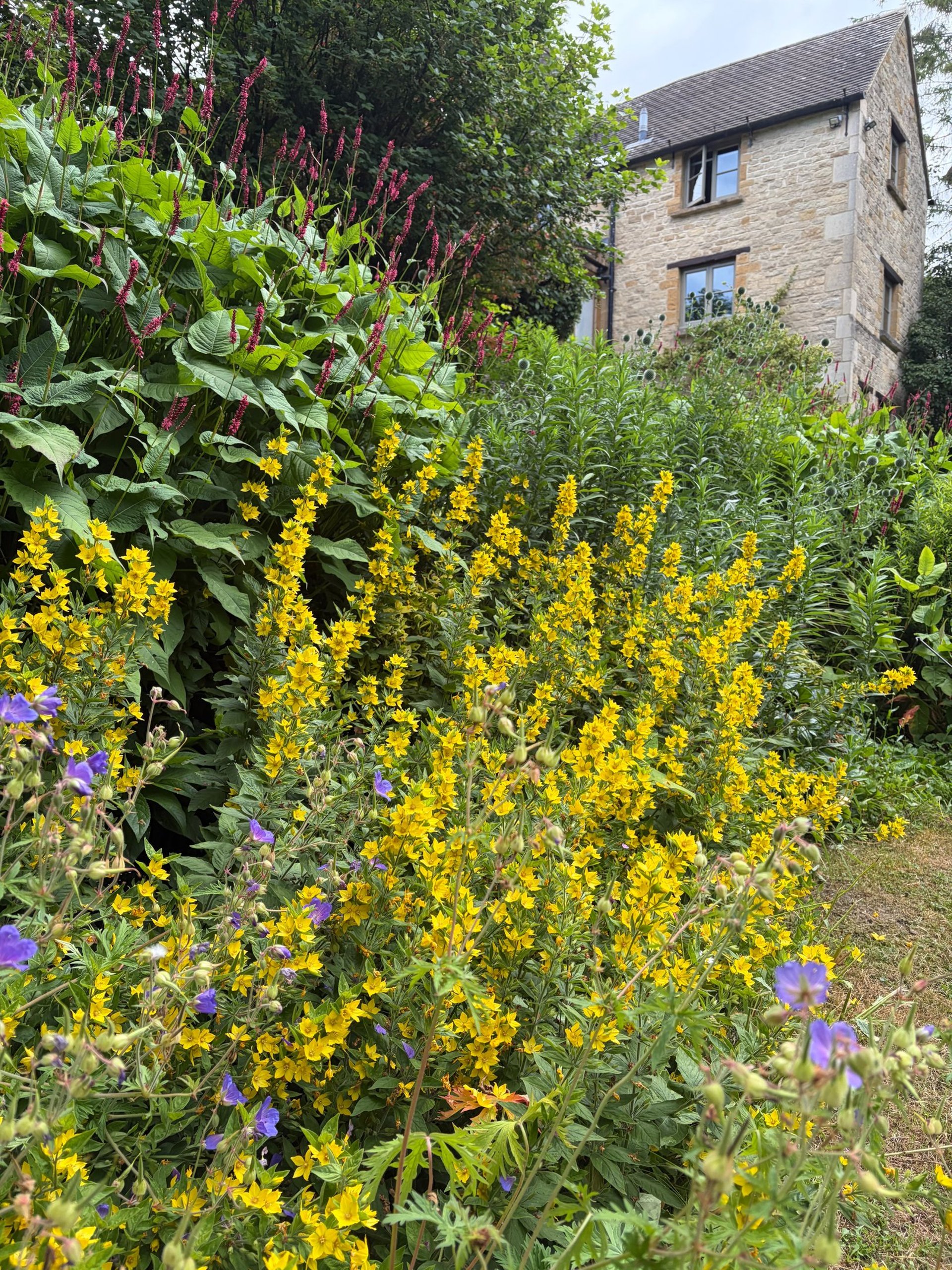
There are gardens I've looked after for many years, and I like to think we've come to know one another rather well. I know where the frost lingers longest on a winter morning and which border always seems to wake first in spring. I know which roses need watching after prolonged rain and which parts of the lawn begin to fade first during a dry summer. Yet even after all this time, those same gardens still surprise me. A self-seeded foxglove appears in exactly the right place, a shrub suddenly produces its best display in years, or a combination of plants that I've walked past hundreds of times catches the evening light in a way I've never noticed before.
Perhaps that's one of the reasons gardening never becomes boring. Just when you think you know a garden completely, it reminds you that there is always something else to discover. Every season rewrites part of the story. Every year brings different weather, different successes and different disappointments. A gardener who believes they have nothing left to learn has probably stopped paying attention.
Looking back, I don't think the greatest lessons I've learned have come from books, qualifications or even from other gardeners, valuable though they have all been. They've come from returning to the same gardens week after week, month after month and year after year. They've come from noticing how slowly change often happens, and how easy it is to miss if you only ever look for the obvious. The garden has been my teacher, but it has never hurried the lesson. It has simply asked me to keep coming back.
I sometimes wonder if this is why gardening appeals to so many people throughout their lives. In a world that seems to move faster every year, the garden still works to its own rhythm. It doesn't care about deadlines or diaries. It asks us to slow down, to observe and to notice things that can't be appreciated in a hurry. Perhaps that's why those first few minutes when I arrive have become so important to me. Before I pick up a tool, before I start weeding or pruning or mowing, I remind myself that my first job isn't to change the garden.
It's to understand it.
The older I become, the more I believe that gardening isn't simply about learning how to grow plants well. Those skills matter, and they always will. But beneath them lies something quieter and, perhaps, something even more valuable. Gardening teaches us to pay attention. It teaches us that every season has its own story, that every garden has its own character and that there is always more to notice than we first imagined.
Maybe that's what twenty years in gardens has taught me more than anything else.
The best gardeners don't necessarily know the most.
They've simply learned how to look a little longer.
Marcus
Marcus Bergin
Thoughts, observations and conversations from a life spent in gardens.
© 2026. Marcus Bergin | All rights reserved.