
Every Garden Has Its Own Soundtrack | Marcus Bergin's Garden Notebook
NATURE & WILDLIFE
Marcus Bergin
7/21/20263 min read
Every Garden Has Its Own Soundtrack
Long before I notice what's flowering or how much the borders have grown, I usually notice the sound of a garden.
It's not something I ever set out to learn. In fact, I don't think I realised I was doing it until quite recently. After more than twenty years of working outdoors, I've discovered that every garden has its own voice. You don't hear it all at once. It reveals itself gradually, usually within the first few minutes of arriving.
Some gardens greet you with birdsong from every direction. Others begin with the gentle rustle of leaves moving in a light breeze. On still summer mornings, it might be the steady hum of bees moving from flower to flower, almost unnoticed until you stop and listen. There are gardens where the loudest sound is water trickling over stones, and others where mature trees seem to whisper to one another high above your head.
None of those sounds are accidental.
They're part of what makes a garden feel alive.
When people talk about designing gardens, the conversation usually centres on colour, shape and planting. We discuss which shrubs complement one another, where the roses should go or how to create interest through the seasons. Yet very rarely do we think about what a garden sounds like.
Perhaps we should.
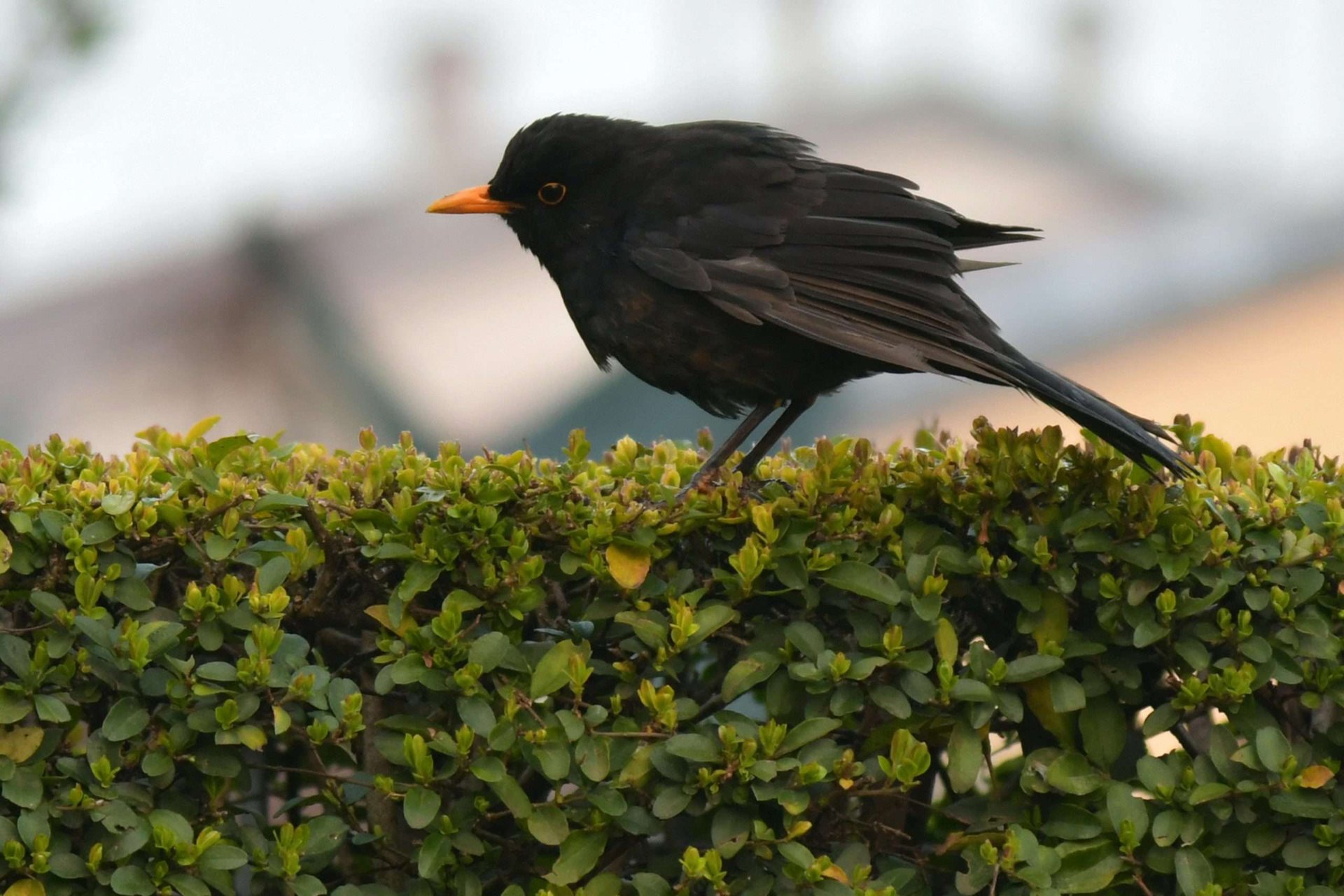
Some of my favourite moments aren't spent looking at a border at all. They're the moments when I pause for a minute, lean on a fork or a rake, and simply listen. A blackbird suddenly bursts into song from the hedge. A buzzard circles overhead, its call carrying across the valley. Somewhere in the undergrowth there's the faint rustle of something unseen going about its day. None of those sounds demand attention, but together they create an atmosphere that no planting plan could ever draw.
I sometimes wonder whether we underestimate how much those sounds shape our experience of a garden.
Think about a garden on a calm summer evening. The swallows sweep low across the lawn, insects fill the air with their gentle chorus, and the leaves barely move. Compare that with the same garden in winter, when bare branches creak in the wind, and the birds seem quieter, their songs replaced by short calls between the trees. The garden is still beautiful, but its soundtrack has changed with the season.
Perhaps that's why silence in a garden can feel so noticeable.
Not peaceful silence, but the absence of life. A garden without bees on a warm afternoon. A hedge without birds. A place where nothing seems to move or call. It reminds us that the true beauty of a garden isn't measured only by the plants we grow, but by the life those plants support.
Over the years, I've realised that some of the healthiest gardens are also the noisiest.
Not noisy with people or machinery, but with nature quietly getting on with the business of living. Birds feeding their young. Insects searching for nectar. Leaves responding to every change in the wind. It's a constant conversation that continues whether we're paying attention or not.
Perhaps that's one of the reasons I enjoy working outdoors so much.
Every day begins with a different soundtrack.
Some mornings it's loud enough to make me stop before I've even picked up a tool. Other days it's so subtle that I only notice it when I pause for a moment. Either way, it reminds me that a garden isn't simply something we look at.
It's something we experience with all our senses.
And sometimes, if we take the time to listen, it has far more to say than we first realise.
Marcus
Marcus Bergin
Thoughts, observations and conversations from a life spent in gardens.
© 2026. Marcus Bergin | All rights reserved.