Gardening for Tomorrow | Marcus Bergin's Garden Notebook
GARDENING FOR TOMORROW
Marcus Bergin
7/8/20263 min read
Gardening for Tomorrow
The best gardens I've ever worked in all have one thing in common. None of them was created for today.
One of the conversations I've found myself having more and more recently isn't about roses, lawns or which shrub will cope best with dry shade. It's a much bigger conversation than that.
It's about tomorrow.
Not tomorrow in the sense of what jobs need doing before the weekend, but tomorrow in the sense of the gardens we'll leave behind. The gardens our children, our neighbours and complete strangers might one day walk through without ever knowing who planted the tree, dug the pond or decided to leave a corner for wildlife.
The older I become as a gardener, the more I find myself thinking that perhaps this has always been the real purpose of gardening.
We're not simply looking after the present.
We're investing in the future.
Every mature oak began as somebody's optimistic decision. Every avenue of trees that now provides welcome shade through the height of summer was planted by someone who knew they would never enjoy it at its full size. Even the gardens we admire most today are usually the result of countless gardeners making small decisions over many decades, each one quietly adding something for the next person rather than for themselves.
There's something deeply reassuring about that.
Gardening asks us to think differently from almost every other part of modern life. We live in a world that celebrates speed. Faster deliveries, quicker results and instant answers have become the norm. Gardens, however, continue to work to an older rhythm. They remind us that some of the finest things we will ever create are the ones we may never see completed.
I think that's a rather wonderful lesson.
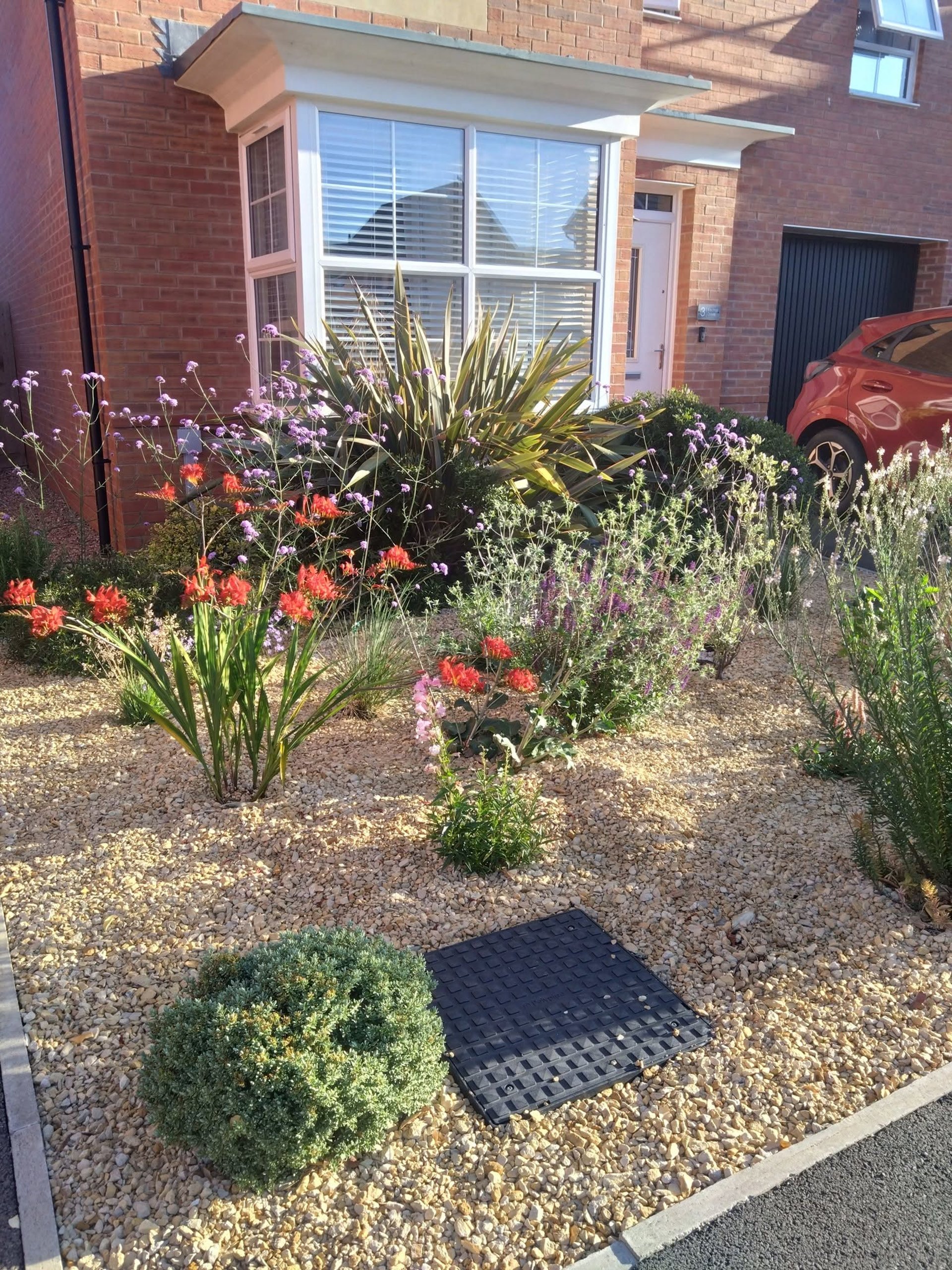
When I look at the gardens I'm fortunate enough to work in, I don't just see flowers and shrubs. I see decisions made years ago that are still shaping those spaces today. A tree planted twenty years ago is now cooling the garden on a hot July afternoon. A hedge left to mature has become a nesting place for birds every spring. A small pond, perhaps dug for no greater reason than curiosity, now supports frogs, dragonflies and countless insects that have quietly made it part of their world.
Those choices mattered.
Not because they transformed the garden overnight, but because they continued to make a difference long after the spade had been put away.
Perhaps that's why I've become increasingly interested in the idea of gardening for tomorrow.
Not because I believe we should stop enjoying our gardens today. Quite the opposite. The pleasure of gardening has always been found in the present moment. The scent of a rose, the sound of bees in the lavender or the quiet satisfaction of finishing a day's work are all reasons enough to spend time outdoors.
But I also think we have an opportunity.
Every time we improve the soil instead of simply feeding the plant, every time we make space for wildlife, plant a tree or choose to leave something a little better than we found it, we're making an investment in a future we'll probably never fully see.
That thought doesn't make gardening feel smaller.
It makes it feel far more important.
Perhaps the greatest legacy any gardener leaves isn't a perfectly maintained lawn or an immaculate border.
Perhaps it's creating a place where life, in all its different forms, has a slightly better chance of flourishing long after we've closed the garden gate for the last time.
If that's true, then gardening has never really been about today.
It has always been about tomorrow.
Marcus
Marcus Bergin
Thoughts, observations and conversations from a life spent in gardens.
© 2026. Marcus Bergin | All rights reserved.